POQY
Experimental Control Panel
Project
Project
Hybytes
Experimental
Experimental
Concept
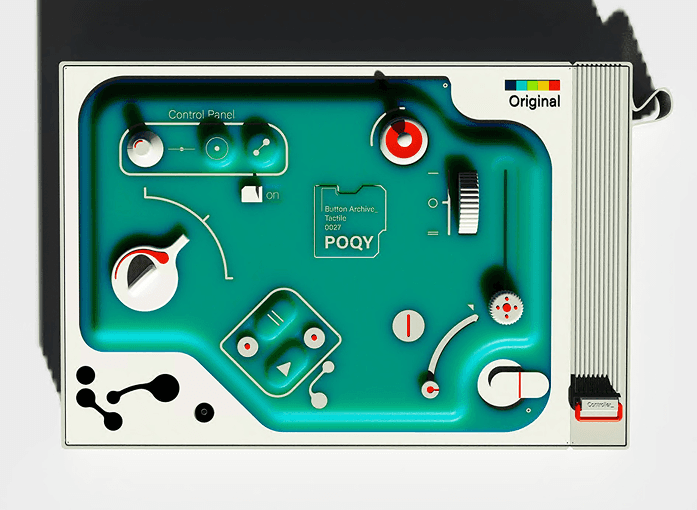
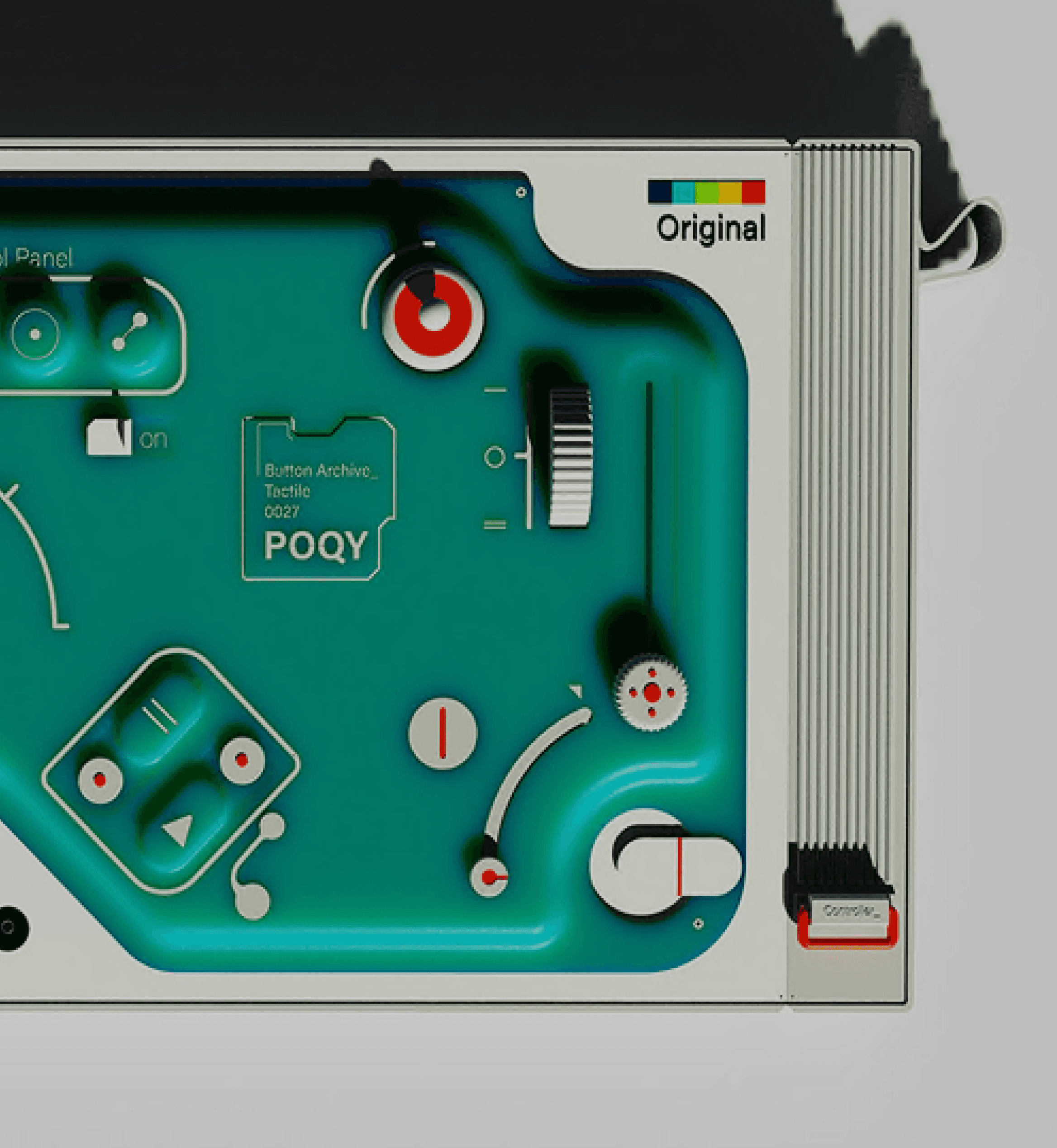
POQY is a speculative control panel designed as a tactile interface archive — a fictional tool used in an analog textile lab to test and log button functionality and fabric responses. Drawing inspiration from cassette recorders, Polaroid cameras, and early UI design, POQY explores how physical interaction and experimental form can communicate system logic without screens.
It’s part machine, part memory device — designed not for efficiency, but for interaction as experience.
POQY is a speculative control panel designed as a tactile interface archive — a fictional tool used in an analog textile lab to test and log button functionality and fabric responses. Drawing inspiration from cassette recorders, Polaroid cameras, and early UI design, POQY explores how physical interaction and experimental form can communicate system logic without screens.
It’s part machine, part memory device — designed not for efficiency, but for interaction as experience.
Inspiration
This experimental control panel draws from analog technology and industrial design, reimagining tactile logic for speculative futures. Echoing the aesthetics of Polaroid cameras, Braun audio systems, and cassette decks, it channels a language of buttons, dials, and visible control. References to lab equipment, Soviet machinery, and textile interfaces bring a crafted, domestic quality. As an artifact of reestablished nostalgia, it invites users to slow down — turning interaction into a meditative act and reconnecting with the physical language of design in a screen-saturated world.
This experimental control panel draws from analog technology and industrial design, reimagining tactile logic for speculative futures. Echoing the aesthetics of Polaroid cameras, Braun audio systems, and cassette decks, it channels a language of buttons, dials, and visible control. References to lab equipment, Soviet machinery, and textile interfaces bring a crafted, domestic quality. As an artifact of reestablished nostalgia, it invites users to slow down — turning interaction into a meditative act and reconnecting with the physical language of design in a screen-saturated world.
This project treats design as experience, not just utility — embracing tactility, narrative, and ambiguity to encourage emotional engagement. Through speculative form and analog references, it challenges the idea that technology must always be fast, sleek, or invisible.
This project treats design as experience, not just utility — embracing tactility, narrative, and ambiguity to encourage emotional engagement. Through speculative form and analog references, it challenges the idea that technology must always be fast, sleek, or invisible.
This project treats design as experience, not just utility — embracing tactility, narrative, and ambiguity to encourage emotional engagement. Through speculative form and analog references, it challenges the idea that technology must always be fast, sleek, or invisible.
Product Specs
Function:
Archive and test textile samples via button interaction
Manually record data with physical sliders, toggles, and spinners
Control lighting and fabric tension through analog dials
Key Features:
Insertable Button Cartridge (labeled POQY): used for testing texture + feedback
Rotary Dials with analog resistance
Fabric Strip Slot to mimic thread path or textile strip motion
Multi-color Indicator LEDs (Polaroid-style top bar)
Complete Button: registers test logs
Iconic Control Symbols borrowed from 80s cassette decks
Material:
ABS Plastic casing, tactile silicone buttons, anodized aluminum accents
Form Factor:
Desktop device, approx. 30 × 20 cm
Inspired by lab equipment, museum devices, and educational electronics
Enzo Mari's autoprogettazione — user engagement through construction
James Auger’s speculative design artifacts
Jony Ive’s homage to Dieter Rams
Studio Ghibli tech — pseudo-functional, tactile, and poetic
Product Specs
Function:
Archive and test textile samples via button interaction
Manually record data with physical sliders, toggles, and spinners
Control lighting and fabric tension through analog dials
Key Features:
Insertable Button Cartridge (labeled POQY): used for testing texture + feedback
Rotary Dials with analog resistance
Fabric Strip Slot to mimic thread path or textile strip motion
Multi-color Indicator LEDs (Polaroid-style top bar)
Complete Button: registers test logs
Iconic Control Symbols borrowed from 80s cassette decks
Material:
ABS Plastic casing, tactile silicone buttons, anodized aluminum accents
Form Factor:
Desktop device, approx. 30 × 20 cm
Inspired by lab equipment, museum devices, and educational electronics
Function:
Archive and test textile samples via button interaction
Manually record data with physical sliders, toggles, and spinners
Control lighting and fabric tension through analog dials
Key Features:
Insertable Button Cartridge (labeled POQY): used for testing texture + feedback
Rotary Dials with analog resistance
Fabric Strip Slot to mimic thread path or textile strip motion
Multi-color Indicator LEDs (Polaroid-style top bar)
Complete Button: registers test logs
Iconic Control Symbols borrowed from 80s cassette decks
Material:
ABS Plastic casing, tactile silicone buttons, anodized aluminum accents
Form Factor:
Desktop device, approx. 30 × 20 cm
Inspired by lab equipment, museum devices, and educational electronics
Enzo Mari's autoprogettazione — user engagement through construction
James Auger’s speculative design artifacts
Jony Ive’s homage to Dieter Rams
Studio Ghibli tech — pseudo-functional, tactile, and poetic
Enzo Mari's autoprogettazione — user engagement through construction
James Auger’s speculative design artifacts
Jony Ive’s homage to Dieter Rams
Studio Ghibli tech — pseudo-functional, tactile, and poetic
Other projects
Other projects